Moving around on all the holds for two minutes, is a workout on an over hanging wall like this, 45degrees. Do 4 sets of two minutes 3 days a week and you can stay fit and do well on your local crag. As long as it's not Rifle, for Rifle you have to stay on the climbing wall 4 minutes, times 4 sets.
Technique, is keep your hips up on the wall and keep your shoulder blades pulled back. You want to try to avoid sagging or rounding your back. Harald Harb, President of Harb Ski Systems, posts his thoughts on skiing, ski racing, technique and more.
Saturday, July 30, 2011
Tuesday, July 26, 2011
Week 15: Everything is going in the right direction.
Lots of weight training in the gym, has improved my overall leg strength, I know now that I injured more than just my Achilles tendon in the ski accident in April. The back of my knee has been really sore for months. This indicates I stretched or tore calf tendons and ligaments, from this accident. Fortunately, my overall leg strength is building and I can really feel it when cycling. Big gains this week. I can stand on my right (injured side) bike peddle and push down to increase power.
When I started rehabbing my Achilles tendon, and my body, in May, it quickly became evident to me, that the whole right side of the body had atrophied. This can happen in a short period of even 5 or six weeks. I was in great shape and 6 weeks later I was a slug through lack of normal activity. I could not imagine skiing in this condition, even without an injury. I'm sure that most recreational skiers realize, how fitness or lack of fitness, impacts their ability to ski, be safe on snow and improve their skiing.
More on this topic and what you can do to create the best ski season yet, on this blog, coming up, so check in often.
Harald
When I started rehabbing my Achilles tendon, and my body, in May, it quickly became evident to me, that the whole right side of the body had atrophied. This can happen in a short period of even 5 or six weeks. I was in great shape and 6 weeks later I was a slug through lack of normal activity. I could not imagine skiing in this condition, even without an injury. I'm sure that most recreational skiers realize, how fitness or lack of fitness, impacts their ability to ski, be safe on snow and improve their skiing.
More on this topic and what you can do to create the best ski season yet, on this blog, coming up, so check in often.
Harald
Friday, July 8, 2011
Ski season in the distance, but I'm still planning strong bike and climbing season.
Week 13: rehab of ruptured Achilles tendon:
I was not so good climbing a 5-10b vertical face, which I've done easily many times before. In face climbing, you have to stand on your toes, on small edges. This is really tough of the the calf and achilles tendon.
I did however, successfully climb a 5-11b ( which is a harder rated climb) overhanging climb, but that's a totally different style, which requires much less pressure on the feet to hold you on the rock. It's going to take another two weeks before I have really face climb. But the biking is good. I can finally stand on the steep hills and that is what it is going to take to get the muscles and tendon really strong again.
So my routine today was, this morning, 1 hour weight room upper body and shoulders, afternoon, two hours biking, 2000ft climbing on that ride, and then in the evening, weight room to do a leg routine. The tendon rehab and calf muscles are one thing, but I also have to get that leg in shape, it's lost a lot of muscle mass doing nothing for more than 10 weeks.
In the weight room for the calf muscles, I do lots of leg presses, toe stands, assisted and unassisted, and some trampoline bouncing.
Ultimately, the goal is to be in top form for the ski season, but I'm hoping to get in some big rides and tough climbs before the ski season starts.
The finish line is in sight.
I was not so good climbing a 5-10b vertical face, which I've done easily many times before. In face climbing, you have to stand on your toes, on small edges. This is really tough of the the calf and achilles tendon.
I did however, successfully climb a 5-11b ( which is a harder rated climb) overhanging climb, but that's a totally different style, which requires much less pressure on the feet to hold you on the rock. It's going to take another two weeks before I have really face climb. But the biking is good. I can finally stand on the steep hills and that is what it is going to take to get the muscles and tendon really strong again.
So my routine today was, this morning, 1 hour weight room upper body and shoulders, afternoon, two hours biking, 2000ft climbing on that ride, and then in the evening, weight room to do a leg routine. The tendon rehab and calf muscles are one thing, but I also have to get that leg in shape, it's lost a lot of muscle mass doing nothing for more than 10 weeks.
In the weight room for the calf muscles, I do lots of leg presses, toe stands, assisted and unassisted, and some trampoline bouncing.
Ultimately, the goal is to be in top form for the ski season, but I'm hoping to get in some big rides and tough climbs before the ski season starts.
The finish line is in sight.
Thursday, July 7, 2011
5 things aging recreational skiers and athletes need to know.
1. Start your activity slower, warm up properly and build to top performance.
2. Better preparation for your season, means more rest days in between hard workouts or activity.
3. The best technique, during training and your sport activity; and the most efficient movements will save you from over working your body.
4. You'll find more aches and pains, so ice and rest are important.
5. In training, less weight and more repetitions are the right formula.
2. Better preparation for your season, means more rest days in between hard workouts or activity.
3. The best technique, during training and your sport activity; and the most efficient movements will save you from over working your body.
4. You'll find more aches and pains, so ice and rest are important.
5. In training, less weight and more repetitions are the right formula.
Sunday, July 3, 2011
Saturday, July 2, 2011
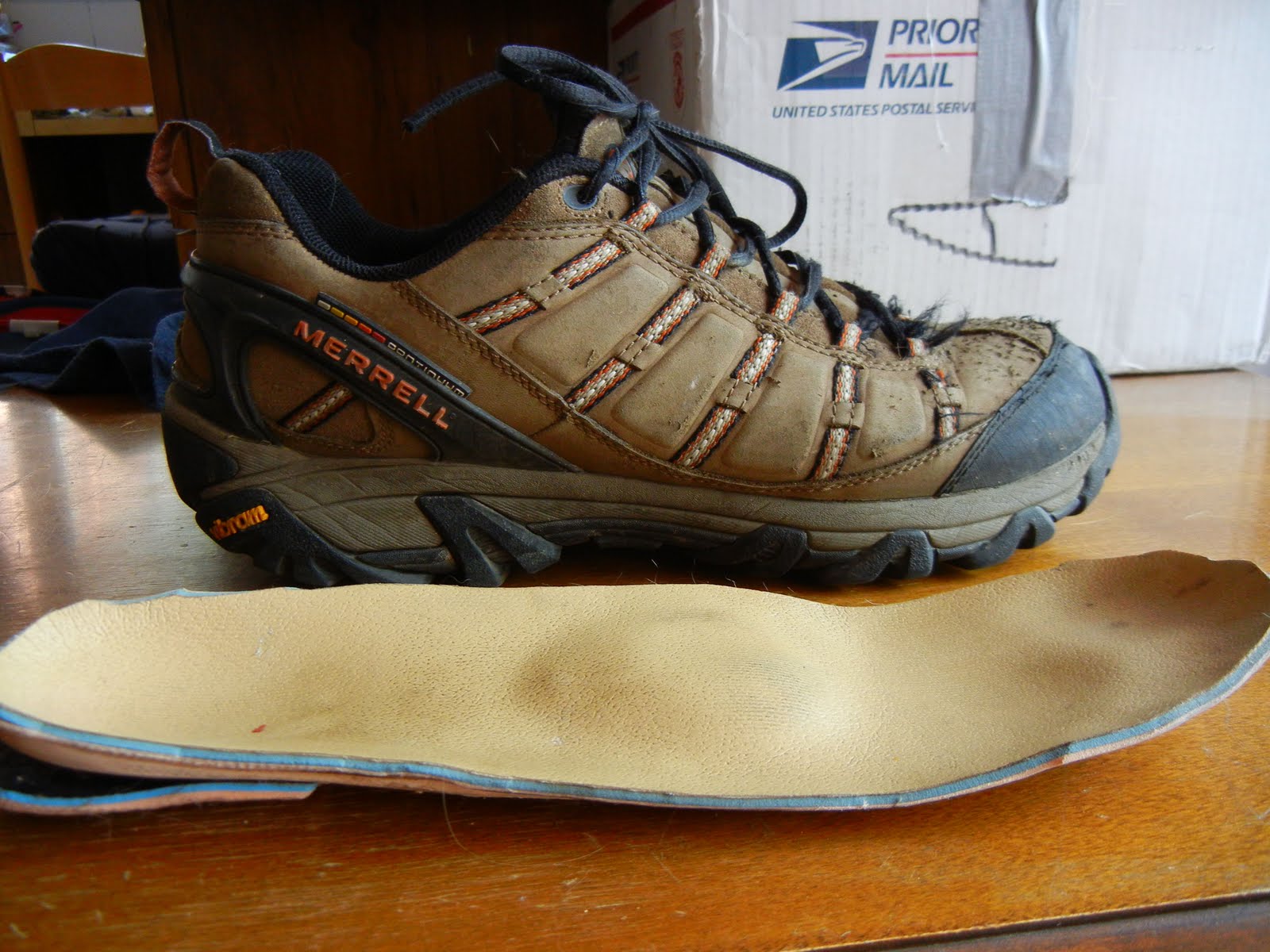
How to fix a Neuroma pad in a cycle shoe.
Here you see a bulge on the foot bed shoe insert (under black tape) . This is a foam pad about 1/4 inch thick, at it's highest point. It is rounded off and tapered to each side. It is attached with tape until the idea location is determined. After that it can be glued or permanently fixed.
The idea is to spread the pressure that comes from pushing on the ball of the foot evenly across the front of the foot. This gives you more ability to apply pressure for longer periods of time.
One reason that forefoot discomfort occurs is from too narrow a shoe or pressure from the sides of he shoe. This can happen in cycling or ski boots.
I've been using this neuroma pad for two seasons, it makes a huge difference in comfort and peddling ability.
Thursday, June 30, 2011
Neuroma in cycling, foot pain!
A neuroma (metatarsal neuroma) Often associated with post leg or ankle surgery, due to inactivity, because foot, especially forefoot loading is rare after time off due to injury. Very painful neuroma (metatarsal neuroma) can be cured with metatarsal pad properly placed behind the transverse arch, (behind ball of the foot). A well constructed footbed is also a necessity. I have experienced this after knee and foot surgery, but after a few months of use; I find the pain subsides. However, I continue to use the neuroma pad in my bike shoes as the load is so concentrated toward the front of the foot. The pad spreads it across the ball of the foot, this really helps with comfort.
Also for serious bike riders a neuroma pad can help to produce more equalized pressure across the ball of the foot giving you better power into the peddle. The comfort improvement alone is worth the effort of getting this done.
Wednesday, June 29, 2011
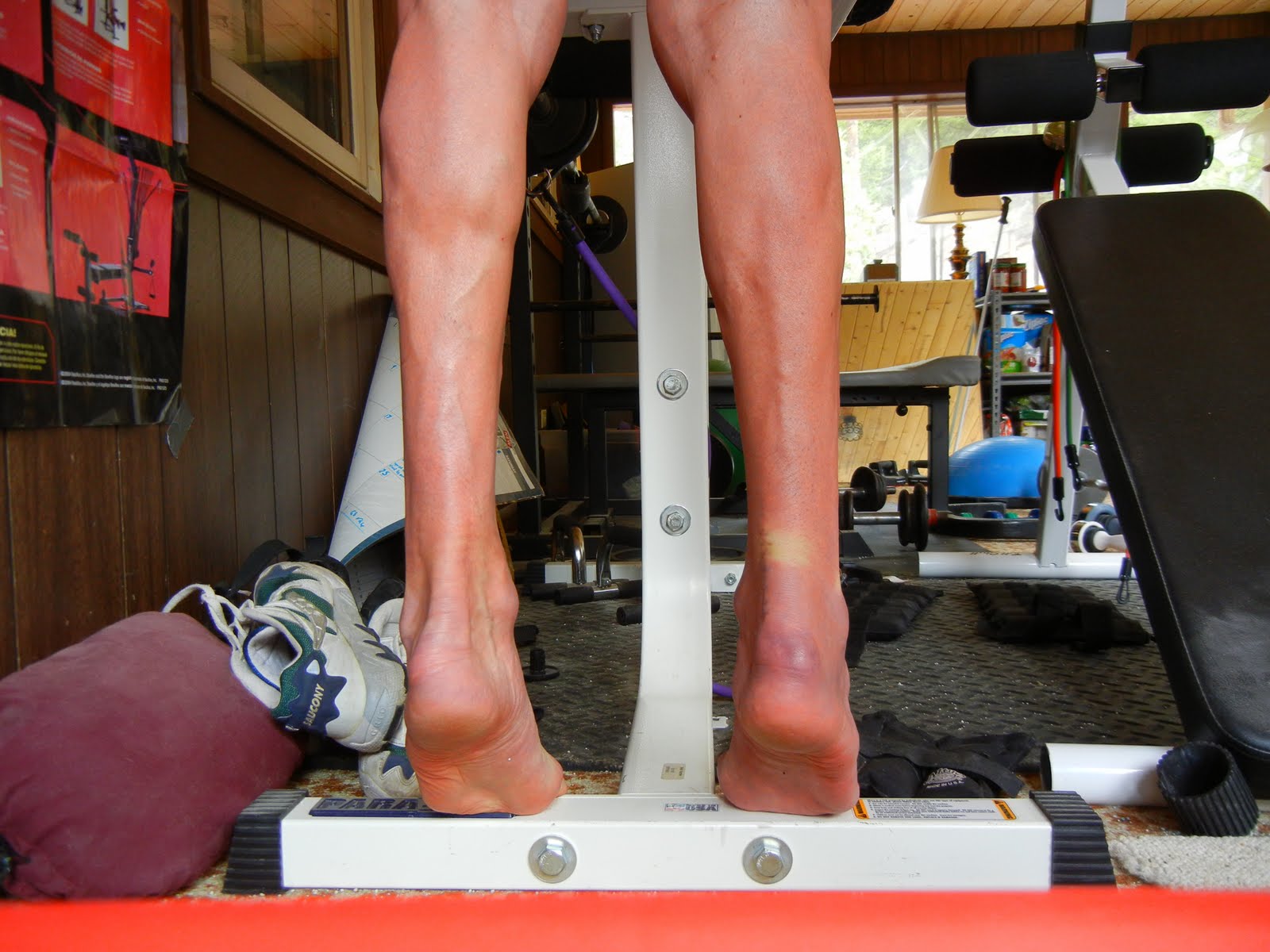
12 weeks after surgery, right tendon.
Because activity of both legs has been limited it's hard to tell which is the reconstructed Achilles tendon, they are both small..
The calf muscle is returning, but less than half it's normal size after 12 weeks. in two weeks this improve quickly.
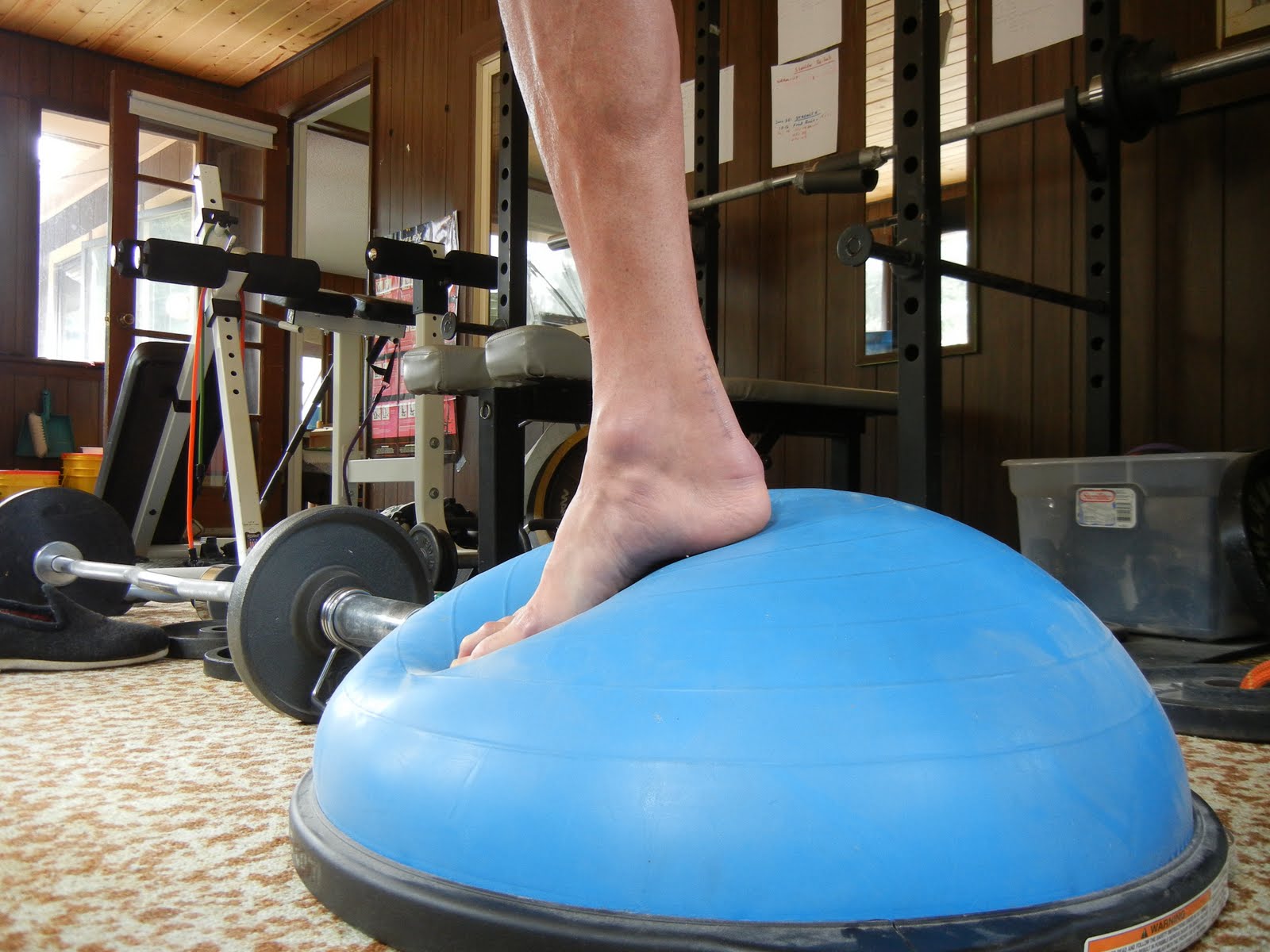
This Bosu ball exercises are great for overall proprioception and lower body and one footed balance training. Also it strengthens all the small muscles you need around your ankle. Use assistance with crutches at first.
At this point one legged squats on the ball and cycling are my main exercises, and leg press for upper leg and hip strength are also important to develop. So any leg press machine with controlled resistance is a good supplement.
Friday, June 24, 2011
Tuesday, June 21, 2011
Monday, June 20, 2011
Saturday, June 18, 2011
Friday, June 17, 2011
Achilles rehab, with Bosu ball.
One of my go to training techniques is the Bosu ball. This should be started no earlier than 8 or 9 weeks after surgery, as the tendon has to be well formed before you can introduce this kind of stress, on the repair.
I do gas peddle toe pushing and ankle rolls on the ball. I also try to balance with the aid of crutches. After a few weeks you can support your body weight on the ball.
You can see a calf muscle starting to develop.
Achilles Tendon Rupture 10 weeks after surgery!
Click on photo to enlarge
Lucky not much swelling and a very smooth repair with thick growth around tendon. This growth will recede and a normal tendon size will develop after about 10 months. The bump on my heel is from Lange boots about 40 years ago, it's still there, as many Lange skiers can attest to.
Thursday, June 16, 2011
Let's have a look at why "Carbon Fiber" works for Ski Boots!
http://www.dodgeskiboots.com/images/boot,right.JPG
Benefits of Dodge Carbon Ski Boots for Skiers
We know that carbon fiber has amazing performance characteristics in sport applications. Examples are: the advances made in road and mountain bike design; strength and lightness are the most obvious benefits. But the power that can be generated by carbon fiber in Tennis rackets, is also well know.
So we know that carbon fiber gives us more strength and less weight, but also gives us more power in many applications.
Less know or less realized is that carbon fiber, also has different vibration characteristics. This is important for rackets, bikes and ski boots. In rackets, Dodge Boots and bikes, less bad vibration is generated, reducing fatigue, therefore you can ride longer, play longer, at a higher level..
What does this have to do with ski boots and how do all the benefits that happen in other applications, work out for skiing?
The first thing you notice when you pick up a pair of Dodge boots is that they are light. in relative terms they are about half the weight of a “Plug”, racing, plastic boot.
When you begin to ski the boots, you notice the immediate strength of edging. Fitting aside, because anything you want can be accomplished with proper fitting, your skis will feel like they have better hold and feel like they are new again.
This is a result of the power of the side wall provided by the carbon fiber and the lack of vibration, which normally makes the skis bounce, in a plastic boot. Well, you didn’t know your boots made the skis bounce! This is not obvious until you ski the Dodge boots for a few weeks.
The next thing you notice when skiing Dodge boots is how far you can tip the skis on edge. You feel like the skis hold better, so the immediate result is more confidence, which means you are willing to go deeper into building angles to the snow.
This has an amazing result and response in quickness as well. The boots are so much lighter that it’s easier and faster to go from edge to edge.
The next performance improvement is fore/aft balance. Because the Dodge Boots are so much lighter they are easier to keep under your hips. They are easier to pull back and quicker to move.
The following are also all benefits, which may not be directly viewed as performance related by some, but they can also enhance comfort. For example: the boots do not change stiffness in extreme temperature changes. So you can put them on in the parking lot and remove them there, because they are not stiffer or harder to bend, when it’s cold. They are not much harder to remove then if they were in a ski lodge.
Another benefit not directly related to performance, but you can derive performance benefits from, is fit. Because Dodge Boots are so stiff, in the right places, you don’t have to over buckle them. in fact, too much buckling may give you less performance. This helps your feet and allows you to stand in the boot longer without pain.
So let’s do a recap, benefits of Dodge boot over Plastic Boots.
Much Lighter -Dodge Boots- Yes, Plastic- No
Stronger -Dodge Boots- Yes, Plastic- No
Edge Hold -Dodge Boots- Yes, Plastic- not so much
Quicker -Dodge Boots- Yes, Plastic- not so much
Temperature dependent -Dodge Boots- No, Plastic- Yes
Comfort -Dodge Boots- Yes, Plastic- not so much
Balance enhancing -Dodge Boots- Yes, Plastic- not so much
Better ski performance -Dodge boots- Yes, Plastic- same as usual
No Boot board -Dodge Boots, quicker transitions, Yes, Rubber Boots- not so much
There you have it in a nut shell, why I ski in and sell Dodge boots.
Tuesday, June 14, 2011
Unfortunately for cycling Armstrong and Hamilton keep the focus on doping.
Hamilton and Armstrong duke-it-out in Aspen restaurant. This is just the next step in the legal battle that is bad for cycling, bad for Armstrong and a losing hand for Hamilton.
Whether or not they ever prove Armstrong was doping doesn't matter, the luster on his coat and the shin on his victories are tarnished. His beer commercials won't last much longer either, so this is going to cost him some big bucks.
Achilles Rupture Rehabilitation: Week 10 for a the physically disabled athlete due to injury.
The danger with an achilles rapture and repair after about 8 weeks is re-injury or damage to the repair.
This is the reason doctors are so cautious and want you to sit around until the tendon is totally healed at about 12 weeks. This makes rehab last much longer but you do end you with a safe strong tendon. Most active people can't take the extended recovery very well.
So at 8 weeks they normally let you walk with crutches and then at week 10 they have you walk with a heel lift.
I'm riding my bike on the road, and doing so on hills, for approximately 1 hour. I walk reasonably well, but after all these activities my tendon hurts. It takes about two days of recovery until I can do the same again. The results are good. I'm always strong after a two day rest.
I do message and physio, I stretch, but it's hard to tell how much stretching is good and how much is damaging the repair. I am also using the rubber bands to develop strength. But getting strength is easy, it's the range of motion that is difficult.
Full weight bearing on the injured foot is the goal, that opens up standing on your bike peddles and rock climbing.
I am getting the upper body prepared, but there is nothing like hanging on rock to make you strong.
I am working on assisted one footed toe raises. I'm a long way (probably at best two weeks to 4 weeks, hard to tell) from achieving that one.
This is the reason doctors are so cautious and want you to sit around until the tendon is totally healed at about 12 weeks. This makes rehab last much longer but you do end you with a safe strong tendon. Most active people can't take the extended recovery very well.
So at 8 weeks they normally let you walk with crutches and then at week 10 they have you walk with a heel lift.
I'm riding my bike on the road, and doing so on hills, for approximately 1 hour. I walk reasonably well, but after all these activities my tendon hurts. It takes about two days of recovery until I can do the same again. The results are good. I'm always strong after a two day rest.
I do message and physio, I stretch, but it's hard to tell how much stretching is good and how much is damaging the repair. I am also using the rubber bands to develop strength. But getting strength is easy, it's the range of motion that is difficult.
Full weight bearing on the injured foot is the goal, that opens up standing on your bike peddles and rock climbing.
I am getting the upper body prepared, but there is nothing like hanging on rock to make you strong.
I am working on assisted one footed toe raises. I'm a long way (probably at best two weeks to 4 weeks, hard to tell) from achieving that one.
Friday, June 3, 2011
Hamilton has many motivations for coming forward! Including partial immunity!
Hamilton is cooperating in a federal investigation into systemic doping by the U.S. Postal Service team at the time when Armstrong put together his Tour de France string from 1999-2005, which would have contravened regulations regarding funding by a federal agency.
Hamilton, who will receive limited immunity for testifying in the case, told "60 Minutes" he witnessed Armstrong injecting the banned blood booster EPO, and also claimed that the International Cycling Union arranged with Armstrong to cover up a positive doping result after the 2001 Tour de Suisse.
Wednesday, June 1, 2011
Saturday, May 21, 2011
Why are some of Lance Armstrong's former teammates out to get him?
Why are former teammates of Lance Armstrong coming out against him?
Because Lance's coattails are the only remaining opportunity they have to link themselves to fame and the possibility for making money out of their bike racing careers.
These are banished, ex-bike racers, fading into oblivion.
If they were not after the money angle or some kind of TV or book deal, they could just tell their story and be done. But that wouldn't make the sports pages,
If you want to come out and admit you were doping and clear your conscience fine, but get it done, why drag Lance Armstrong into it?
The reason is simple, money, because Lance is where the money is.
If you link yourself to Lance and make that your story, the media will be all over you. I guess that's the nature and behavior of people who are used to cheating. I'm not much of a Lance fan, but using him, to get yourself on TV and creating other possibilities through him, to make money; to me, is predatory at best, but really, it's cowardly and deceitful.
That's my option and I'm expressing it because what these predators are doing now, is bad for the sport of cycling.
Friday, May 20, 2011
How long can Lance Armstrong hold out?
As more former Teammates of Lance Armstrong step forward and accuse him of doping, his response, "I've never tested positive to any banned substances," may be wearing thin?
Lance Armstrong, under pressure again, not while riding a bike. So his book, "It's not about the bike," may be more real than he expected?
Saturday, May 14, 2011
Recovery exercises for torn Achilles Tendon
The most important thing you can do in the first weeks of waiting for recovery and healing, while in a cast, is to keep the rest of your body as fit as possible.
Five weeks into Achilles Tendon reconstruction, keep the injured side fit, from the ankle up. Make sure you don't stress the Achilles repair. Here is one exercise for quad muscles, using a stretch cord attached to a fixed point and your ankle.
Starting position, foot behind body.
Extend your leg, with your knee, until leg is straight, then extend leg forward.
Click on Photos to enlarge view!
Friday, May 13, 2011
Tree Skiing Control
When skiing trees, keep your feet and legs together, tip the inside ski first, but keep them close. A wide stance only offers skis to become independent minded, especially if they are at different angles in the snow. The last thing you want to happen in the trees is skis going in different directions.
Wednesday, May 11, 2011
Colorado May Snowstrom
This is my back yard. The round device in the background is in case aliens are trying to contact us about "Direct Parallel". We know there is intelligent ski life somewhere in the Universe.
Saturday, May 7, 2011
Starting the actual movement rehab training after 4 weeks.
With a special peddle, strap and lift; I can comfortably ride without pain.
In two weeks, I'll be using a regular bike shoe with a hide foot support, made from carbon fiber out of a Dodge ski boot.
I'm a week ahead of regular rehab, but I'm really careful never to stretch the tendon or feel pain. Any pain at this point in rehab means you are damaging the repair.
Thursday, May 5, 2011
Monday, May 2, 2011
A world class slalom skier, shows us the phases of the arc.
A perfect turn set up, early angles, balanced above the gate.
Now it is time to really get around the gate, so flexing or bending the legs takes pressure off the skis, so the skis can be tipped to high angles, which in turn, increases pressure.Keep tipping the feet and the skis will arc, hold the upper body in the counter acted relationship to finish the arc.
This is a perfect modern world cup turn, not very complicated, if you know what's happening. Every skier can learn from the best.
Wednesday, April 20, 2011
Wednesday, April 13, 2011
Tuesday, April 12, 2011
Monday, April 11, 2011
Freak accident ends ski season early for me.
Last Tuesday, skiing in very thick fog, I was leading the group and skiing blind, very slowly and in total control. I hit an ice wall, made from a snow cat track, and went forward head first over it, but my ski stopped dead. I tore my achilles tendon, clean in half, in the ski boot. Same place in Austria where I did the other one, thirty years ago playing tennis, bad luck with Achilles here, but this time skiing. My first ski accident with injuries in my whole life. So, I'm out of commission for at least 6 to 8 weeks. What a silly way to get injured.
Subscribe to:
Comments (Atom)