Tuesday, December 20, 2011

Compare best slalom skier in the world to Vonn's set up.

                                               Knock Kneed Alignment
Vonn, twisted up! When the knee drops inside as shown here, the upper body follows with flexing at the waist, this loses power to the ski. Upper body rotation follows in this case, which helped to skid the tail of the stance ski. Notice how lindsey's outside boot doesn't have a strong angle it's slipping.
Schild, Straight leg, but still countered! Check out the great alignment on this girl. She just won her 30th World Cup slalom, amazing. Straight leg, upright upper body and skis headed where they are tipping. Strong angles on both skis, no knee drive, excellent!


                The next two photos show not an subtle difference, it's dramatic.
Collapsed at the waist, excessive hip drop and excessive twist of the hips.

Monday, December 19, 2011

Head ski boot technicians still don't have ski boots figured out.

Lindsey Vonn in slalom, over counteracted and knocked kneed.
Here you have the best skier in the world and she can't buy a slalom run on Head boots. When she skied on Rossingnol boots, she used to win 2 out of 3 slaloms.  Neither can Ted Ligety or Bode Miller score in slalom, they used to win on other products.

So what is up with Head boots?

All three US champions used to win slalom races and were almost a sure bet to be on the podium in slalom, when they were on Rossingnol Skis, Boots, and or Nordica and Fischer.

Head has yet to figure out slalom, they have great skis and even their boots are great, but setting the boots up for any of their athletes, to win a World Cup Slalom, is mystifying for them.

Here is a hint, your setup for slalom, is too soft or too knocked kneed. This doesn't take a rocket scientist to figure out, even if you have one, which I do.

Saturday, December 17, 2011

"World Cup", ski technique, by Harald Harb

Keys to focus on, inside hand lead, inside ski tipping and flexing. PMTS shows you how you achieve these movements. Skiing is not a position! You have to know how to move into these body angles and we can teach you how. www.harbskisystems.com
This is Deville a young Italian. Great skiing! The Austrians better watch out the other countries are producing some amazing skiers.

Svindal, If you thought when you were attending one of our ski camps, that inside leg flexing and tipping, was just for fun, you might be mistaken!

Cuche, Even the best skiers in the world, screw up, if they don't counter balance earlier in the turn.
This is Bode at his best, counter acting, and with strong counter balance, the inside ski has huge angle and the outside knee, is right up against the boot. His inside ski is too far forward, but that's Bode; he never follows established, proven skiing performance. But never, I say never, model yourself after Bode, there is only one Bode.

Monday, December 12, 2011

Exiting the turn by Dopfer


Here Dopfer, one of the new stars of the German Team, is in the releasing phase of a turn. He has relaxed his holding leg, which begins his transition to the new turn. He will change edges using a strong retraction move to get the ski light. 

The releasing movement result in flat skis and and  floating light skis in transition.

Sunday, December 11, 2011

Ivcia Kostelic: Winner of Slalom

This is a much more efficient body transition and angulation. From here his release is easy relative to the winding and unwinding Ligety has to do. Ligety's boot set up is the main reason for his need for contortions and adjustments. (this is an update on the previous post, so read the previous post first.)
Ligety has had to adapt to his boot set up, rather than the other way around. Most racers don't even notice this unless their coaches or Boot Technicians bring it up. Such a minor change in the boots, can improve this situation,  but not changed can effect hundreds of world cup points through a season. 

Saturday, December 10, 2011

A holiday special from Harb Ski Systems, Harald's books on skiing and Performance Skiing DVD.

http://harbskisystems.com/Check this out
Casper Nolan, US slalom star, Perfect body alignment, strong turn exit.
 Ted Ligety, rotated, dropped hip, weaker knee angle. Minor differences like this in each turn result in differences of consistency and time over 50 or 60 gates.

Friday, December 9, 2011

Nolan Casper best of the Americans in slalom.

Ted Ligety
This is a really weak set up for Ted Ligety, if it's not fixed soon, it will not be a nice scene. The outside knee behind the inside boot is not a good sign, also notice his knees are crossed and his blocking is much too early. His upper body is already far to over-rotated.


Nolan Casper on the other hand looks really strong, great set up and his technique is much cleaner than Ted Ligety's.

Ligety's slalom not ready for the best yet!

Starting turns with leaning and rotation, doesn't set you up well for a hard, round, World Cup slalom turn. His hips are already back behind his boots. It means you have to save the turn late,  when you should be releasing. That makes for a hard edge set, which is slower.

Huge difference here, same turn, compared to Ligety, this is the winner, Kostelic. He is on the outside ski, already Counter balanced and countered. His hips are forward and over his boots.

Hirscher performances the seemingly impossible.


Photos by: Diana Rogers, Harb Ski Systems.
Another secret that coaches and instructors don't know. You can be forward on your skis without engaging the tips. Here the best skier in the world, Marcel Hirscher, he is forward with his body, but not loading his tips. His ski tips are off the snow. How do you explain this?

Follow this "Blog",  more to come!

Thursday, December 8, 2011

The "O" frame release is prevalent on the  world cup!

For more information about "O" frame releases consult the Harb Ski Systems web site, for vidoes and books!

Release old stance ski with movement, to the little toe edge! PMTS!

Few in the world have equaled Mario Matt in Slalom, World Champion and Olympic Medialist.

PHOTOS BY HARB SKI SYSTEMS, DIANA ROGERS PHOTOGRAPHER.

Tuesday, December 6, 2011

Ted Ligety is still ahead until this mistake.

Ted Ligety: Reminiscent of a Bode Miller save! Ted had to recover from this mistake for the next three turns, that's what cost him the victory. 
                               Marcel Hirscher:  Perfect Balance wins every time. 

Hirscher at the gate compared to Ted Ligety

                                              Leaning
                                               Perfect Balance

Ligety Technical Comparison to Hirscher

You can already see what is going to happen here. Ted is still ahead at this on the course.
He loses counter balance, you can see it by where is head is and his upper torso angle relative to his hip. It's almost a straight line.
Hirscher is more upright with his torso. His inside hip is higher  as well.
Ted loses the race here, the next two turns; he is in saving mode, where Hirscher is attacking. A momentary lapse like this can be the difference between winning and coming second in a world cup race. These guys are the two best GS skiers in the world right now.

Monday, December 5, 2011

Proud to Say, another "Expert" skier and a PMTS product.

                                  Geoff Darst, Silverthorne Colorado

Tuesday, November 29, 2011

Marcel Hirscher, more on Perfect Transition

Frame1. After releasing his right ski, (see previous description) by flexing the leg and flattening his outside (downhill) ski, both skis are flat and his legs are at the same flex angle.


Frame 2. As Hirscher increases his inside leg tipping and flexing it allows him to add more angle to that ski because it's less weighted. This brings his body across his skis for the new arc.


Frame 3. Increasing his inside leg flexing and tipping allows his CG to move inside the turn.


Most coaches are focusing on the wrong side and wrong leg, for modern day skiing. The big toe or outside ski edge, has to come on late, but strong. This can only happen if the body is properly set up. If the big toe edge is the focus (from the beginning) the body is never set up correctly and the skier then grinds his turns, rather than slices his turns. 

Marcel Hirscher perfect GS transition

Setting up well above the gate, inside ski (the left foot) tipping and flexing to set up his body.
Here is the critical move, he brings his body together "compact", Hands forward, yet he continues to tip his inside foot and flex his inside leg. He also adds big toe edge  angle, (that's the right foot and ski) Boots and skis always working together to create the same angles. Inside ski and boot tucked and held, well back, under his hips. Too many racers bale-out here and let the inside ski move forward, that's just slow.

Here is where you can be confident, he flexes his inside leg even further and to do so he has to clear space for it to move up, out of the way. This moves the hip more inside the arc. Most racers here, try to step out of the arc, with the up hill ski, hold on for more speed. 
Hirscher begins to flex and relax the outside leg, (right leg) and prepares for transition. 
Flexing the right leg allows the old holding edge,  to dissipate, moving his Cg, center of gravity to the new turn. Now both legs are now evenly flexed. Notice there is no ski lead. Hirscher has minimal ski lead compared to most other contemporary racers. 
Again little or no tip lead. This part of the turn is created because he continued to increase angles by tipping his inside leg and ski. Too many coaches focus on the wrong leg; the outside ski leg, it is less important and doesn't set up the correct body situations.  Of course, once you are in the right part of the arc, adding outside leg tipping and ski angle is correct, but not to set up the arc.

I'm much more a Porsche guy. Especially this one.

It's a little over the top but sure is fun.

Saw this in Cherry Creek yesterday, Denver.

New Lexus Super Car!


PACKING UP AFTER A GOOD DAY OF TRAINING

                                   Harald and Jon Olsson

Monday, November 28, 2011

Shut up Lance everyone knows you are a doper!

It's time for Lance to own up. We have lost total faith in him and any sponsors that are still using him are despicable.

One of the scariest pictures I've seen in a long while!

What is really scary is, one of them "might" be our next president!
And the best one of the lot, the one, who's "up front" 'quote ha,ha', he's the best candidate for the right, and he's an independent, Good luck!
I'm not an Obama fan, but this is ridicules.

Wednesday, November 23, 2011

Skied with Jon and Warner today.

Jon Olson studying his video between runs. You thought this guy was brilliant in the air, 6 time X Games big air champion, well let me tell you, he can lay down angles with his skis, on the snow, rivaling many of the world's best.

The last skier who could ski race at the world class level and be the best in the air at the same time was Hermann Gollner.

Jon Olson studying his video between runs.

Tuesday, November 22, 2011

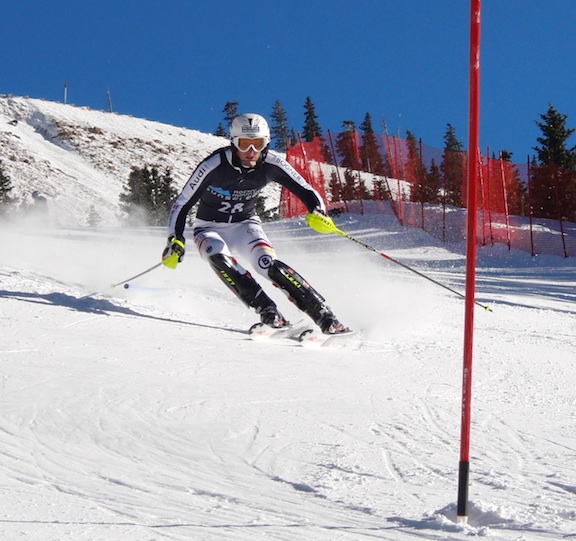
Audi Corporation, supports the organization that unfairly uses or abuses ski athletes world wide.

The FIS (federation international de Ski) is the world wide ski organization that controls all aspects of international ski racing. Sort of like how Bernie Ecclestone controls F1 Car racing.

There are tremendous amounts of money coming to the FIS from members, license fees, race fees, race organizers, national dues, sponsors, logo rights, TV rights, etc. Where does all this money go? It is difficult to ascertain how it comes back to the athletes, except for the fact that the FIS does maintain and publish a complicated ranking and points system.

The FIS does not organize or run the races, it doesn't pay athletes, it doesn't support training, so what does the FIS do with all this money? It does sanction events, but that is just a stroke of the pen.

It also makes rules, in many cases rules that are unpopular and unjustified in the view of athletes, coaches, manufactures, ski resorts, and spectators. Does something smack of a total authoritarian organization here?

The scary part is that the FIS also can arbitrarily change rules, about course setting, skis, length of courses etc. Often these rules directly impact the safety of racers and even spectators.

In the most reset situation the FIS has mandated a change in Giant Slalom ski, side cut or shape, which directly effects how racers ski or can ski a course. This in turn affects the speed, and trajectory of the skiers. The FIS maintains the new rules make GS skiing safer, everyone else disagrees, yet they are still going ahead with the changes.

Everyone presently associated or formerly associated with the sport has expressed their displeasure over the new ruling. Those in the know, including the athletes, say the new rules make the sport more dangerous, less fun to watch and less elegant; this ex-racer and coach agrees with the athletes.

The battle is ragging and the athletes are speaking out in their defense. In response the FIS has instituted a gag order on athletes; if they speak out, they are fined or sanctioned. Now is that democracy in action?

How can a respected company like "Audi Auto Corporation" and the other sponsors want to be associated with such Tyrannical organization?

Stay tuned for more to come on this subject.

Sunday, November 20, 2011

How to beat the FIS

Protests work, but not by athletes, by the public. Sponsors will disappear if the public stops showing up to watch GS races. You have to hit these idiots in the pocket book. Stop buying Atomic ski product, they are the biggest supporters of stupid rules. The World Cup towns, hotels and restaurants, will start to tell the FIS what to do when they stop selling rooms, and Wiener Schnitzels, and schnapps.


BTW. AUDI CARS ARE OVER PRICED AND THEY COST A FORTUNE TO MAINTAIN, A SUBARU IS A MUCH BETTER VALUE. PLUS AUDI SPONSORS THE FIS, A TYRANNICAL ORGANIZATION THAT MAKES RULES THAT HURTS ATHLETES.

The FIS is a tyrannical organization. Tyranny will never advance the sport of Skiing.

Because the FIS is such a repressive organization and about to fine athletes that speak out against their policies, it means we have to get vocal on Facebook, Blogs and any other public media,

to set them right. They shouldn't be able to do this in a democratic world.

Monday, November 7, 2011

This is what racers should strive for in their skiing.


What always seemed strange to me when I watch ski coaching; is how coaches seem to lean toward or emphasize ideas that are the consequence of movements that are not intended rather than focusing on strong fundamentals.

Two examples of such misdirections in the history of skiing are the Jet Turn and White Pass Turn. Both were mistakes, and many coaches picked up on them as the "latest, greatest techniques", which they never were and never became.

The latest in this history of misdirection of ski technique, is the Skivot or the Pivot turn.
There seems to be an obsession with this type of skiing with many coaches. Unfortunately, it's something that most skiers can already do and can't reduce or control. The skier in this photo, shows what only a handful of skiers in the world can do. Whereas, almost every tourist skier knows how to skid or pivot, and doesn't know how to stop doing it! The same applies to young racers who will never make it, due to the misguided teaching of many coaches.

Rather than working with skiers to gain the fundamentals that will serve skiers well for the rest of their careers, it's always baffling to me, why coaches want to waste the careers of promising skiers with techniques that are dead-ends. Rather than teaching them the fundamentals that could guide them to the types of turns demonstrated by the skier in this photo (above).

Friday, October 28, 2011

Deciding on Ski Boots? Here's a guide to Performance considerations.


Hey Harald, Since the Vonn boot discussion has morphed to a discussion of the Dodge boot, I’m curious if you’d be willing to shed more light on the new Head boot and general boot stiffness.

This is my post:
...how many athletes, even at the WC level, can actually make use of such a stiff boot? As I understand, an improper setup can render even the best boot, completely useless to the most skilled athlete [point of the thread really I guess]. I know that I and many other very good skiers cannot [do not] spend 100% of their time on even a 150 flex boot... So, what is the relation between setup and boot stiffness, and where do you draw the line on a boot being too stiff for an athlete [thinking racing applications only for the time being]?

I know we have discussed this before and you are an advocate of a stiff boot for obvious reasons regarding pressuring the ski, etc; but I know you’re also an advocate of tailoring every aspect of the boot to the skier/athlete. With guys I know [22 FIS points] skiing a ZB Rossi [140 flex] it seems that it would take a special athlete to handle a 170 flex boot. Even at the elite level not all athletes are created equal.

So to summarize the above – when do you hit the point of diminishing returns in terms of boot stiffness?

Here is a Dalbello 110 flex that skis great for 90% of skiers. It doesn't ski like a soft boot. It's a performance design. So if the design places you in the right balance point, there is enough support unless you are a racer on ice, or over 180 pounds or over 6'-1" tall.


HH response:
As you know I'm 150 pounds, I don't bend a boot and it's my philosophy not to, the best skiers don't want any boot bending or flexing. As far as your friend goes, , how does he know he wouldn't be faster in a stiffer boot? If the ankle position in other words, the dorsi flexion is right, in the boot, the flexing comes from the hips, knees and back. I have movement at the top of the boot, I don't stuff lots of spoilers behind my calf, and I adjust the booster so it's not over tight, and I leave the top buckle so I can move forward. That is how it works for me. I think the Dodge has some way to go before it's perfect, but for right now it's the best, super high performance boot, I know. I ski better "off piste" with a Dodge, it's just physics, it weighs about 1/2 of regular plug boots, less weight to move around if you get out of position and if you ski,  "off piste", aggressively; you are bound to have to manage your CG over your boots or vice vera.          
Ski Boots that hold up under pressure. 
http://harbskisystems.com/retail/retailboot.htm

Thanks for the quick response. That actually helps a LOT. The most intriguing part is regarding where flexing is coming from. Your philosophy is different from many – especially in this area of the country where the current buzz is all about softer boots. You’re getting your mobility in the boot from not having it clinched down overly tight on your leg at the top, not having spoilers, etc. This is similar to how I ski my boots as well, although I might try backing the top buckle off a turn or two… might be why I haven’t found the “magic” in a softer boot.

This allows you [us] to still ski with our ankles, but also have access to lever the front of the ski when we have to – at which point, the boot is going to flex no matter what because of the amount of force being transferred. I do appreciate my 130’s off-piste though, because I tend to over-lever the front of the ski mainly because I can get away with in here in NY. The softer flex makes my fore/aft less “touchy” in softer snow.

This is different from how others are getting ankle mobility – they are doing it with a softer boot – and I’m assuming are not leaving room for ankle mobility in the top of the boot – meaning they are probably clinching the boot down tight. They are aiming for ankle mobility, which is great, but they are sacrificing access to the front of the ski to do so. The other possibility is that dorsi flexion of their setups is not ideal, which is likely as well since it takes time and attention to fine-tune (at least it has for me).

Racers I know, have been pondering this topic for awhile. Their thinking is, dropping down to a Rossi ZA potentially (ordered a ZB and considering swapping for a ZA). I’ve been urging them to keep the ZB because I think going to a super soft boot is a mistake. The part of the reasoning I was missing was the point you just made about how you get your ankle mobility.


Dodge Boot, The only "high performance", comfort ski boot, in the world, made of carbon Fiber.


BTW – I totally understand why you like the Dodge boot. After handling them in the shop, it makes complete sense. The weight is incredible. That alone could make the boot a tremendous success – not even taking into consideration the lateral stiffness that comes from such a stiff material as carbon.


HH response to: Your philosophy is different from many –
I'm not sure if that's a compliment, but thank you. It should be because the success rate from "the many" is marginal. Our success rate is phenomenal. My need and understanding, and the same goes for those on the WC, for a stiff boot, is simple, you get a faster response to re-balancing with the stiffer the boot. This goes for everyone once you learn how to use it. It goes with technique as well. If you want to steer the ski and skid it until you have to jump on the edge set, get soft boots. With a supportive set up, you can adjust the pressure to the tip more progressively as well. It sounds contradictory, but it's not, once you learn it. Think about it, if you are trying to get to the tip, before you get there the boot flexes, it moves away from you, you have to move farther forward, (while trying to tip the ski) and to do so you are working against the plastic. When I am at the front of the boot, I keep my hips moving forward until the ski tip bites, then I move off the pressure. This is a fraction of a second for each turn. If I am being thrown around, I use the back and front of the boot to keep me centered. If my boot is soft, when I want to rebound off it, I can't get it, because the boot flexes away from me and absorbs my energy. It puts your recentering timing way off. It slows your reaction timing. The cycles of boot philosophy change often, from stiff to soft, and this comes and goes over the years, just like opinions about wide stance to narrow stance change, for coaches. Most have no idea of why or what is actually happening. Coaches are weak at setting up boots, even at the world cup level. So they embrace most current philosophies or follow a trend instead of developing knowledge for themselves..


I believe as everyone here knows that soft boots are mostly cheap, under-performers, and they just hold back your skiing development. They keep you at the same level. Look at the sport car comparison, more performance means, stiffer springs, lower Cg, stiffer shocks and bushings. The German car makers have known this for years, even in their street, performance, road cars. Try to take a sporty approach to corners in an American road car of the 60ies, 70ies and 80ies you were wobbling all over like in a boat, they were a joke.  Compare that to the first 911s or Jaguar XKEs. Or even road cars like the Saab, VW, BMW 2002 or a 530.

The other part, soft boots put your body into a compromised position, many cause you to over use your muscles, because you are holding yourself for every turn, rather than the boot helping.  These soft boots tend to lower your hips, create more steering and give you lordosis (curved lower back) You might even tear out an achilles tendon. Ha!
Questions: Are there any people who you wouldn't recommend a stiff boot for? For example, would a green-level camper be hindered by a 130 flex?


Answer:
We have many Green (intermediate skiers) campers in 130 flex boots and they are better supported. Many are in good 100 flex boots, as well, because of the speed and steepness of the slope they ski. If you aren't going to need the support that comes with speed and terrain, it's not, "value smart" to over boot. As the flex index goes up, so does the price. We put many women for example, in a 90 flex Head boot, which is a great boot, great value and we have great skiing results with it. But to a 125 pound women, the 90 flex Head boot is like a 130 flex, for a 170 pound man.


Whatever you aspire to or dream, begin it. Boldness has genius, power, and magic. Why waste your energy, time and funds practicing incorrectly when the right way is known? 

Thursday, October 27, 2011

What happened to Harb, is he losing his mind?

I'm not losing anything and I'm not an over broad nut case, that Lenny Bruce turned into. He was on drugs, I'm clean except for a few cocktails here and there. I'm just appalled at what is happening in our country. And we go around the world telling everyone else, how to behave. If anyone looks at what is happening in the US of A today; the USA would lose all credibility, it has left, anywhere. The police and government are beginning to behaving like, Syria's, Assad regime, and their national police force (military police force).

Really, what is the difference, our police aren't shooting anyone yet, but they are beating, detaining and arresting innocent protesters.. Have the US police killed anyone yet? No, not yet, but history shows if this gets bigger, the National Guard is next and they kill people. Remember Kent Sate? It has to be brought up before a tragedy like this happens again. All you need is one scared cop or a trigger happy national guard cadet, things get out of control fast.

Funny how it's never too late to mourn the dead, but too early to be warning the population and authorities, of what might happen..... and this citizen lived through it almost fifty years ago, and no one saw it coming. History repeats itself, we are not in a good trend escalation wise, people are angry and not afraid to get out and show it. Can anyone say, Vietnam War protests? This movement can easily get bigger and more violent. If there is anything you can learn from the "Arab Spring", it's the more the police bully, arrest and fight the protesters, the more conviction the protesters gather. Don't underestimate the people of American's resolve, everyone thinks Americans are soft, not when they are angry and desperate, they are not.