Sunday, April 15, 2012

Short Turns with Flappers! Carved Short turns!

Compare this tip engagement to the pull back move.


Tuesday, April 10, 2012

How to Develop Big Angles to the Snow.


In the fig.1, above the top of the arc is developed. Counter balance and tipping onto the new edges is accomplished. The inside leg is beginning to flex and tip.
Fig, 2
Fig.2, shows the commitment to the continued tipping toward the little toe edge side of the ski. The upper body stays counter balanced and the hips are countered.
Notice how the inside foot is held back from pushing forward?

Fig.3, the skis are directly in the Falline. The inside boot buckles are in the snow. The inside thigh is parallel to the snow. The outside leg still has slight bend, not locked out.
To keep the inside foot pulled back at this speed and angle, requires strong movement focus. This doesn't come naturally, it needs work.
Fig.4, The outside leg bends slightly to bring the upper body toward the outside ski side, this allows the skis to finish with a tightening arc.

The inside arm and shoulder although they look to be in the same relationship through the whole arc are actually moving forward to keep this relationship. If this is not done energetically enough, rotation of the upper body relative to the skis results.


Saturday, April 7, 2012

High C edge change.

One of my favorite photos, because it shows all the movements I work so hard to produce, yet don't always show up the way I want.
The falline or downhill direction, runs perpendicular to my skis. My body is downhill or upside-down. Yet the momentum from the previous turn, keeps me from falling over. This is one of the goals or targets you can achieve, if you are carving your skis with good connecting movements from turn to turn.
The movements that make this possible are flexing the legs to get out of the previous turn. Tipping the skis, boots and legs toward the new turn, and counterbalancing with the upper body at the beginning. Like in this photo.

Friday, April 6, 2012

PMTS Direct Parallel Accreditation at A-Basin

The latest PMTS Accreditation at A-Basin is a huge success.

Every-time a new PMTS Direct Parallel instructor is minted, the level of world wide ski instruction goes up.
Some of the Trainers and Examiners, (in red), with newly minted PMTS Direct Parallel instructors from Welch Village, Minnesota and Cascade, Wi.,  plus some loyal local Colorado skiers. 

Monday, March 19, 2012

Harb Ski Systems

Harb Ski Systems

Tricks are for Kids!

Skiing is all about having fun!

"Harald's" Ski Photo for the Day: March 19th.

Harald Quote: 
"Skiing is no longer about turning your skis. It about changing edges without turning." 
Flexing to release and going through transition flexed, does not mean you are in the back seat.
Most people like to see photos of the big angles and sensational steep turns. But almost more important is how you get there. Here are some photos of the transition, where the turn is literally built. This position of the lowered hips, tipping legs and skis is normal if you want to become an expert skier. 

Sunday, March 18, 2012

The "Winter Tour" is not over yet! Last week at Yellowstone, in Montana.


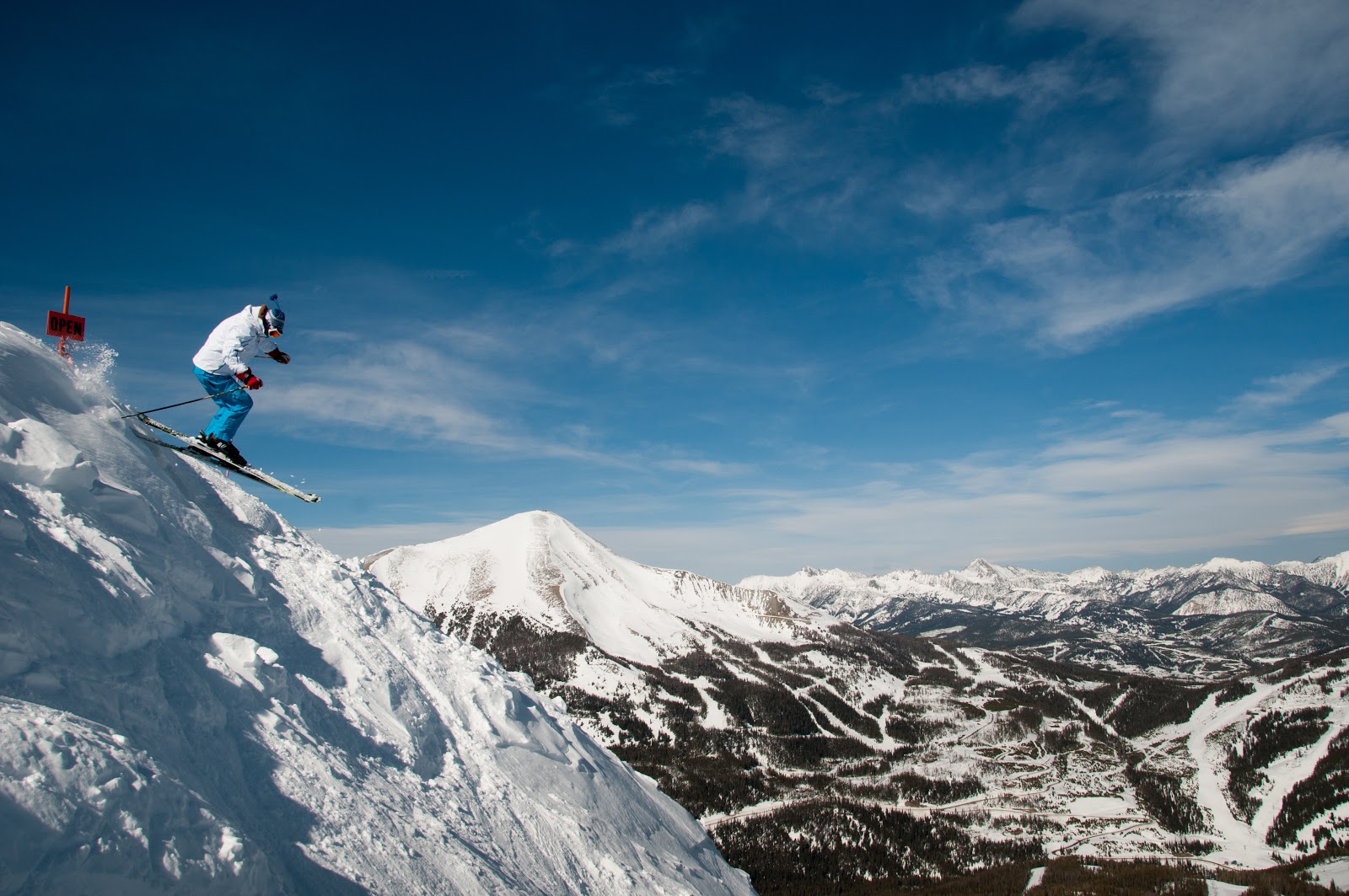
                         Lone Peak at Big Sky
         I'm back from "Ski Paradise", but not done yet, next is the "PMTS Direct    Parallel", Instructor Accreditation, and then we are off to Europe for the Austria Camp.

                        "The fun never ends at Harb Ski Systems."

Tuesday, March 13, 2012

One of the ungroomed runs out of the trees.

Skiing the crud and bumps on the "Rock and Roll" skis, by Head. With the right PMTS, counter acting movements, any ski will turn correctly, in any snow. 

Monday, March 12, 2012

Carving it up on perfect snow.


Laying it over with a flexed inside leg and counter-acted hip.

  The inside arm and hand lead the arc, flexing the inside leg, dropping the inside hip, brings huge carving angles.

Skiing the crud on Head Peak 84 Skis.

The key to "skiing fun", in crud and powder on "Good" wider skis is; tipping the feet and boots. Most skiers think you have to huck and chuck your upper body. Keep the feet and skis together, tip the inside ski first and stand on the outside ski, its not that technical.
                                   Yellowstone Club snow, Paradise of Skiing.

Friday, February 17, 2012

The Essentials of Skiing

How to get it done!
You don't have to figure it out, or get it second hand. The secrets of becoming an Expert Skier and a World Class ski coach, are in this book. There is a handy DVD series also available.
You can order at www.harbskisystems.com
http://harbskisystems.com/You can order on my web site

Thursday, February 16, 2012

Early edge and body angles

When the release is correct, early engagement above the falline is possible, with extension or up unweighting these turns "in short radius", are not possible.
The examples here are to demonstrate early edge angles really mean, for commentary in the video of Interski Skiing, which is in the Blog article, four posts "Below".

                                       Enlarge photos by clicking on them.

Demonstration of another transition, used by World Cup slalom racers.

Wednesday, February 15, 2012

Movements that make sense start with correct analysis.

Click on this Photo to enlarge it.
From the left, fig. 1,2,3, The release sets you up for the next turn. Farthest right fig 4.  The top of the new turn sets you up for the ability to control the arc. 


We teach movements for these important parts of the arc. That's where I begin, I evaluate how a skier negotiates these parts of the arc and whether he is using the correct movements to achieve what he wants from the arc.

Tuesday, February 14, 2012

National Traditional Ski Schools always want to compare their technique, they teach and ski, to World Cup Skiing?

As a ski race coach, who skied in some world cup races as a competitor and coached world cup racers, I find there is no commonality between ski school, instructor skiing and world cup racer skiing.
There is such a large difference between the two that maybe they could even be classified as different sports. Like the difference between the bobsled, luge and the Cresta Sleds.

The movements and maneuvers that traditional instruction uses in their national systems would never hold up in the world cup arena.

Some examples are obvious, instructors teach and use up extension movements and skiers in slalom use retraction movements.

Instructors teach leg twisting and steering while world cup skiers use tipping and inside leg flexing and tipping movements.

World Cup skiers use relaxing and momentum to drop inside the turn to create angles, ski instructors use extension and push-off to move themselves into turns.

These are not subtle differences, they are totally opposite bio-mechanics. Yet the traditional instruction world still clings to the idea that their instruction systems are based on world cup skiing. You can be the judge. If you look at the posts on this Blog about World Cup skiing and skiers you will begin to notice some differences. Hopefully for your own sake!

The difference is clear in this comparison. Upper body discipline being the most obvious. Although this also shows in the lower photo, instructor skiing, already square to the skis at the falline, dropping the inside hand, losing hip angle and leg length position. The hard edge sets, due to excessive unweighting between turns, by instructors, is very obvious in versions of their higher end skiing.

Monday, February 13, 2012

Comments by Canadian demo team, about Interski, demonstrator techniques.

At the point of this very turn, this skier is making, as the commentary in the video says, "the skier has early edge pressure, before the falline".  This theme seems to be pervasive in the commentary, yet is never borne out by the demonstrators.

It seems to me that there is no 'edge pressure" before the falline, as the ski is not engaged in the snow. All the pressure is still on his inside ski.

Another quote: "The Austrians base their top end skiing on the World Cup model".
I don't understand, nothing could be further from the truth. Do these instructors commenting on skiers, only say this stuff because they like to hear themselves talk or do they really believe what they are saying?


                                 There is a huge difference, and a disconnect between the understanding of ski technique on the World Cup, compared to traditional ski schools.
Here is a world cup skier, showing edge pressure above the falline and a narrow stance, which it seems is still not important to the Canadian Demo Team, ski instructor community.